
Ave Europa acknowledges the outcome of the presidential election in Poland, marked by the victory of Karol Nawrocki, the euroskeptical candidate from Prawo i Sprawiedliwość (PiS), affiliated with the European Conservatives and Reformists (ECR). This result represents a turning point not only for Poland, but for the European Union as a whole. Europe is once again the continent of self-examination. We receive this defeat not with pride or bitterness, but as an occasion for reflection and introspection.
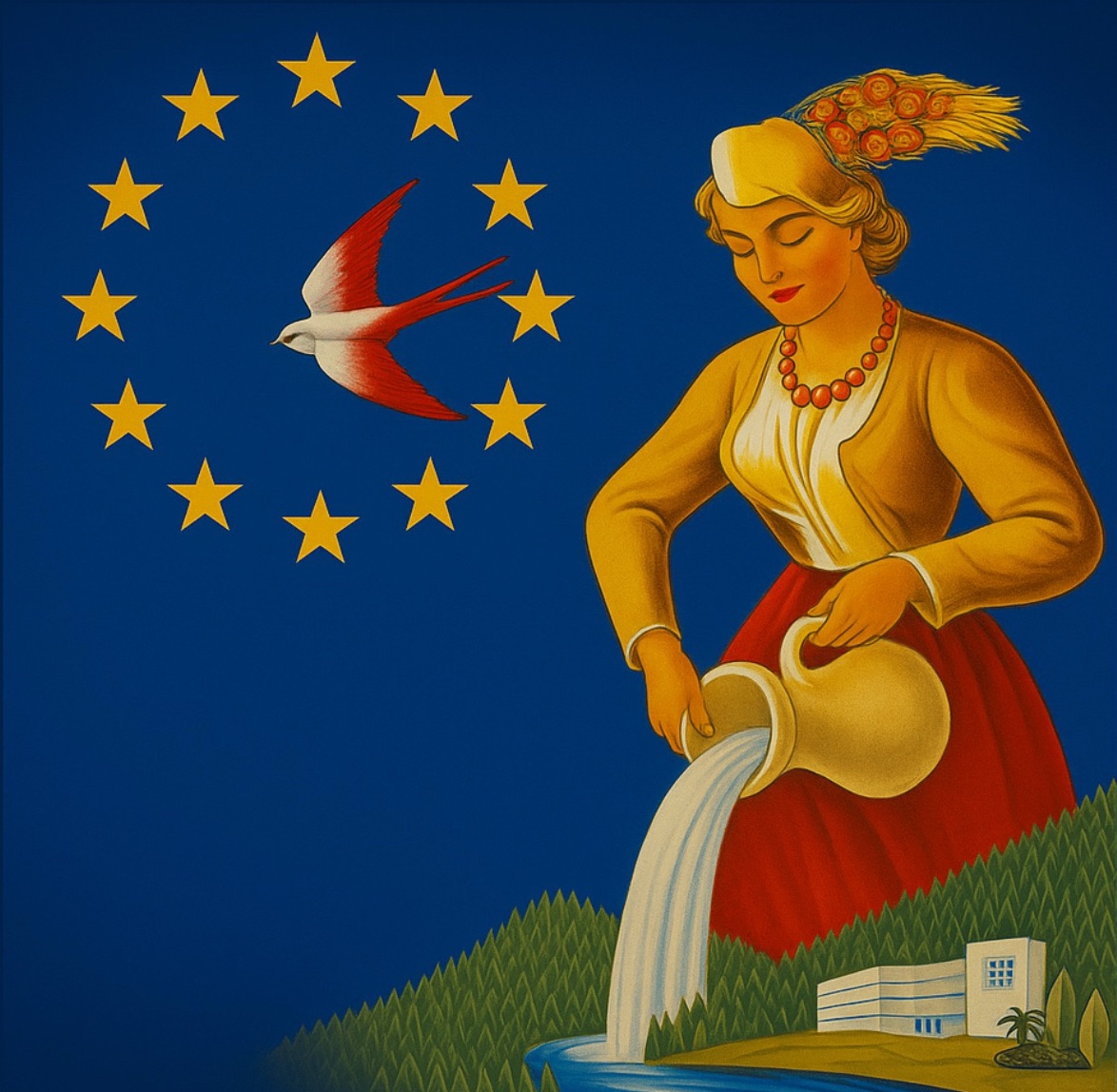
Initially, our statement had been drafted in anticipation of a victory for Rafał Trzaskowski. We now respectfully acknowledge the electoral success of Karol Nawrocki. Early in the evening, the diaspora vote suggested a narrow win for Trzaskowski; by mid-evening, rural precincts put Nawrocki ahead by five points, before urban tallies narrowed the gap, though not enough to overturn the result. The margin, while ultimately decisive, would have been too modest. Even in case of a pro-European victory, there would have been no space for triumphalism. Our stance remains unchanged: humility, gravity, determination.
A Candidacy Rooted in a Renewed European Vision
The defeated candidate, Rafał Trzaskowski, stood out for his clear and consistent advocacy of the European project. His campaign was shaped by a vision of Poland as a fully engaged and sovereign member of a united Europe. He championed the rule of law and called for a Europe grounded in shared security and solidarity.
By contrast, the PiS candidate structured his campaign around themes of national identity, sovereignty, and social protection, distancing himself from a model of integration perceived as too liberal, too urban, and too Western.
His electoral success reveals a persistent resistance to what is often viewed as a liberal, urban, and Western-centric Europe.
One of the deepest divides between PiS voters and the European Union lies in the perception that Western Europe has betrayed Eastern Europe. In their eyes, Germany, especially under Angela Merkel, emboldened Putin through initiatives like Nord Stream, which came to symbolize a disregard for the security and dignity of the East.
Perception, however, is everything in politics, and the pro-EU party has done little to effectively counter this narrative. Despite some attempts to rebrand, it remains closely associated with Brussels technocracy, cultural liberalism, and migration policies that are deeply unpopular in much of Polish society. The tone of its campaign often came across as one of liberal arrogance, of what could be described as a form of symbolic violence.
One particularly infamous episode crystallized this disconnect: a photo of a pro-Trzaskowski MP handing a bag of potatoes to a dying man. The image went viral and came to symbolize how disconnected KO (Civic Platform) elites were perceived to be, offering charity in a way that felt patronizing rather than humane.
There are many factors at play here, and this is not merely a matter of policy: it’s fundamentally about narrative, identity, and trust.
Unless the pro-EU camp can shed its aura of elitism and engage more directly with the everyday concerns of ordinary Poles, without resorting to moralizing or posturing, it will continue to lose ground to populists who, despite their flaws, grasp the emotional undercurrents of national politics.
A Complex Electoral Geography
The defeat, though real, reflects the enduring complexity of Poland’s electoral map.
If past electoral patterns hold, Trzaskowski drew support from urban centres like Warsaw, Poznań, Gdańsk, and Wrocław — regions long committed to openness, EU membership, and civic freedoms. Youth turnout in these areas, particularly among university-educated first-time voters, may have been high, though insufficient to shift the overall result.
The forces supporting Karol Nawrocki drew strength from rural and semi-rural areas, especially in the east and southeast — notably in Podkarpackie and Lubelskie — where conservative Catholic traditions remain deeply rooted. Older generations and voters anchored in traditional frameworks of national identity responded strongly to the PiS message.
The PiS campaign, supported by a dense network of loyalist media outlets and nationalist civic groups, focused on themes of protection, sovereignty, and resistance to perceived external influence.
Ave Europa will examine the consolidated results to better understand the evolving dynamics of Polish public opinion and the deepening social and territorial divides within the country.
Sources of Polish Disillusionment with the EU
Polish disaffection with the European Union cannot be reduced to mere hostility. It reflects structural anxieties and contradictions in the European project.
Many citizens, particularly in peripheral regions, feel that economic integration has raised prices without delivering sufficient protection.
EU funds are seen as distant abstractions, while everyday life becomes more costly.
Legal disputes with Brussels over judicial independence or media laws are domestically framed as interference. Among PiS voters, these tensions are felt more as punishment than partnership.
A significant segment of the population perceives the EU as promoting social norms that clash with national traditions, especially in areas such as family law, education, and religion. These perceptions are reinforced by conservative Catholic networks and nationalist intellectuals.
Such disaffection intensified during the last EU mandate, particularly amid debates on the rule of law and the migration crisis.
A Strategic Moment Despite the Rupture
Yet Poland’s Presidency of the Council of the EU offers a critical moment. Under the banner “Security, Europe!”, it centres on defence, border protection, resilience to foreign interference and disinformation, and safeguarding economic freedoms.
At her best, Poland can offer arguments that resonate across the Union. Ave Europa hopes that Poland will fully assume its role in the Council Presidency, even in a context of political transition.
We particularly hope that Poland will maintain its commitment to Ukraine and to Europe’s military sovereignty.
The Road Ahead
The current euroskeptical leadership faces a dual challenge: to rebuild trust with those who feel excluded from Europe, and to show that its approach to the EU is more than defensive rhetoric.
The new government will need to manage complex coalitions within the Sejm, Poland’s lower house, where fragmentation demands pragmatism. It will also have to bridge the country’s internal divide: between urban modernity and rural conservatism, between integration and sovereignty.
To restore faith in European solidarity, it will have to produce results — especially in communities that have felt overlooked by the past trajectory of EU integration.
A Humble Victory, A Collective Task
This victory does not close the debate — it reframes it. It must be received not with resentment or pride, but with humility and purpose.
The task ahead is to reunite a country fractured by years of polarisation, and to prove that Europe can be principled without arrogance — close to its citizens and attentive to their will, all the more so when they express discontent.
At Ave Europa, we draw two key lessons from this election. First, the failure of the liberal campaign: people no longer want to be governed by moralizing rhetoric. Second, the erosion of public ethics on the conservative side. It is regrettable that the main populist conservative option is represented by a candidate who would be disqualified in any other context due to serious ethical concerns.
That said, we welcome the fact that the candidate is not fully aligned with Russia, especially at a time when Ukraine needs our support more than ever. However, there is a real risk of Poland drifting closer to the United States. It is up to Europe to prove it can be a reliable geopolitical and military actor.
Speak to the people. Respect public service. Honor our commitments to European partners. Aim for strength.
These, in our view, are the four priorities of a liberal-conservative Europeanism capable of rallying the public, rather than exploiting the fractures of contemporary society.
Europe is not only a set of treaties and institutions : it is a shared conversation among peoples. Poland has spoken, and it must be heard. If we still believe in a European future for Poland, then we must be willing to engage with every Polish voice, including those who challenge us.
Let us treat this moment not as an indictment of one half of the country, but as an invitation to win back trust, not with slogans, but with presence, dignity, and outcomes.
Ave Europa
June 2nd, 2025