The agenda of the May 2025 mini-plenary session of the European Parliament is anything but anecdotal. It engages the Union on major questions of war and peace, sovereignty and energy, science and enlargement. Each point discussed bears significant strategic implications. Ave Europa lays out here its principled and detailed positions on the key issues addressed, with a view to shaping a coherent and forward-looking European response.

1. The Israeli-Palestinian Conflict: A New Strategic Approach
We welcome the European Parliament’s intention to adopt a firm stance on the Israeli-Palestinian conflict. Ave Europa holds an uncompromising position grounded in humanitarian law and strategic clarity.
We unequivocally condemn the Hamas terrorist attacks. At the same time, we firmly condemn the conduct of the war by the Israeli cabinet under Prime Minister Netanyahu. We express our support for the sectors of Israeli society opposing the war and reaffirm our solidarity with Palestinian civilians subjected to extreme violence and occupation policies.
A new strategic approach is needed. We support the elaboration of a comprehensive political framework that respects both:
- The sovereignty of Israel and its right to security;
- The sovereignty of Palestine and its right to independence.
This framework should include:
- The active involvement of Arab countries signatory to the Abraham Accords in reconstruction and diplomatic mediation;
- The establishment of an international commission to assess the conduct of the war and ensure accountability of Israeli senior officials;
We urge the European Union to seize the initiative and elaborate a post-war memorandum setting out the eight necessary steps to end the conflict.
2. CBAM and Trade-Based Decarbonisation
We support the European Parliament’s report to strengthen and clarify the Carbon Border Adjustment Mechanism (CBAM).
The CBAM is a vital tool for ensuring that the EU’s decarbonisation efforts are not undermined by imports produced under laxer environmental standards.
CBAM must serve two essential purposes:
- Supporting the competitiveness and viability of European industry;
- Advancing the Union’s decarbonisation trajectory through environmental conditionality.
In addition, we believe CBAM should evolve into an instrument of international environmental partnership, encouraging third countries to adopt comparable standards and opening avenues for regulatory alignment.
3. Energy Sovereignty: Ending Dependency on Russian Fossil Fuels
Ave Europa fully supports the EU’s objective of achieving energy independence from Russian fossil fuels. The planned timetable to end new and short-term contracts by the end of 2025 and phase out long-term contracts by 2027 is both realistic and strategically necessary.
This decoupling is essential to:
Reinforce EU strategic autonomy and reduce vulnerability to geopolitical coercion;
- End the indirect financing of armed conflict and authoritarian regimes;
- Accelerate the clean energy transition in a secure and sovereign manner.
We support the adoption of tariffs on Russian and Belarusian fossil imports as a transitional measure to reflect the geopolitical externalities of energy trade. Furthermore, the forthcoming resolution 2025/2717(RSP) must reflect the REPowerEU roadmap and prepare for the broader strategic autonomy of the EU in energy policy.
4. Moldova and Ukraine: A Strategic Logic of Enlargement
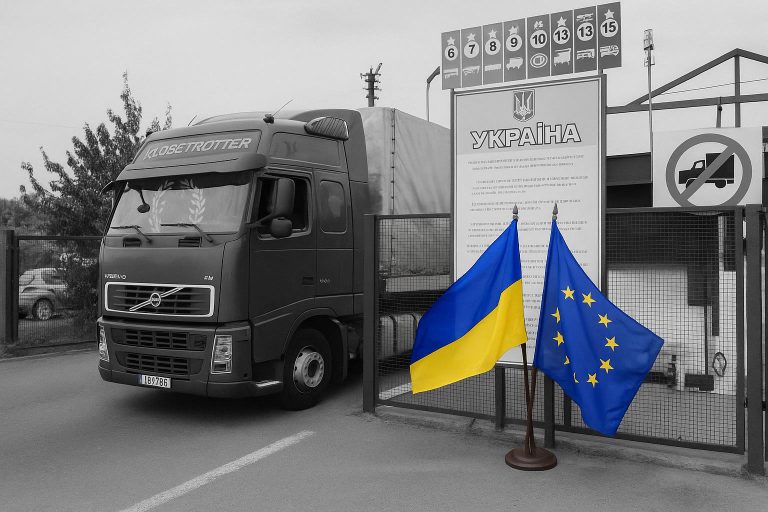
Ave Europa expresses full support for Moldova and Ukraine’s EU accession trajectories, which must be translated into real and measurable progress. Accession talks opened in June 2024 have been largely symbolic so far; they now require practical acceleration.
We advocate:
- Accelerated harmonisation of legislation with the acquis communautaire;
- Strengthening of institutional capacity and democratic safeguards;
- Deepened integration via the Deep and Comprehensive Free Trade Area (DCFTA)
We particularly welcome the Commission’s proposal to extend equivalence under Council Decision 2003/17/EC to specific seed varieties from Moldova (fodder plants) and Ukraine (beet, sunflower, swede rape, soybean). This technical recognition reinforces trust in Moldova and Ukraine as regulatory partners.
European standards must serve as bridges, not walls. Sectoral integration is the operationalisation of enlargement. Enlargement can proceed sector by sector, through legal alignment and mutual benefit.
5. Horizon Europe and Euratom: Strategic Energy and Scientific Sovereignty
Ave Europa supports the continuation of the Euratom Research and Training Programme for 2026–2027. Nuclear research must remain a core priority within Horizon Europe and its complementary programmes.
We call for nuclear energy to be fully included in future EU funding, across three axes:
- Development of next-generation reactors (SMRs, fusion technologies);
- Upgrading of existing nuclear infrastructure to meet the highest safety and efficiency standards;
- Improvement of legacy reactor performance and waste management systems.
Nuclear energy is a pillar of European energy sovereignty, decarbonisation, and industrial strength. It must no longer be treated as a tolerated exception, but as a strategic necessity.
6. Research Sovereignty: Choose Europe for Science
Ave Europa urges the European Union to embrace research sovereignty as a strategic objective. Europe must become a continent of researchers, engineers, and inventors — not merely a funder of frameworks.
We advocate:
- Reversing the brain drain and attracting top talent;
- Leading in disruptive technologies, deep tech and frontier innovation;
- Boosting patent output and scientific industrialisation.
Research sovereignty is not isolationism; it is a condition of relevance. Europe must ensure that the next breakthroughs in AI, biotechnologies, energy and space are born, developed, and scaled on its territory.